
4. July 2024
The six dimensions of winning teams
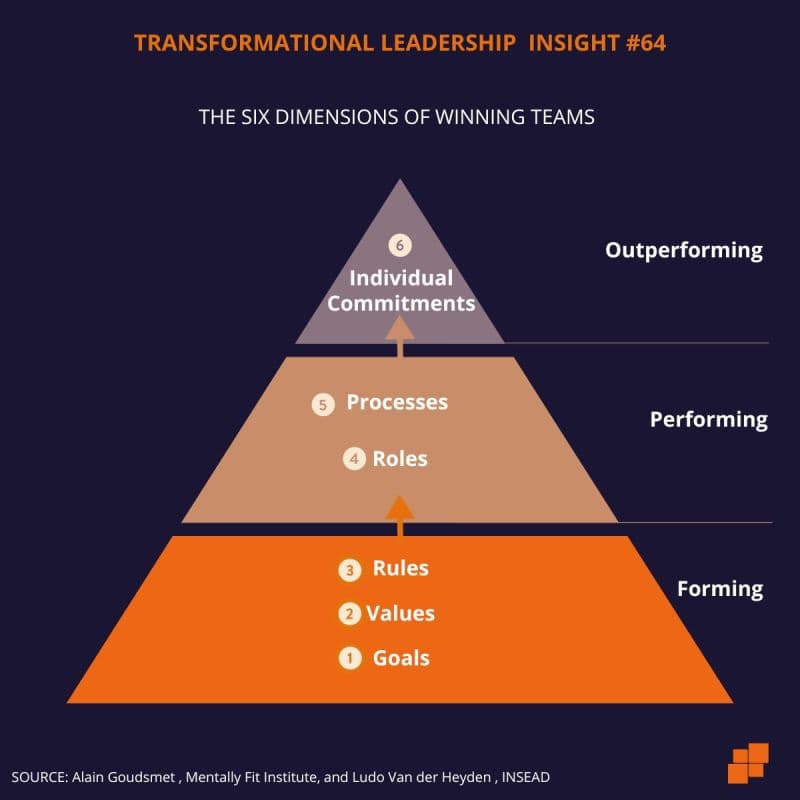
Creating successful teams is crucial to a company's success, especially in a transformational situation. I liked the recent INSEAD article by Alain Goudsmet , and Ludo Van der Heyden where they outline 3 levels and 6 essential dimensions for successful teams. Level 1: Foundation of the team The foundation of a winning team is formed by three fundamental elements: goals, values, and rules.
These elements create the necessary solidarity and togetherness.
- Clear and shared goals guide the team's efforts. 2. Values act as guiding principles and define the desired behaviour within the team, such as integrity and cooperation. They determine how goals are achieved. 3. Rules translate values into concrete actions and ensure that the team's behaviour is in line with both goals and core values. An example of the power of these elements can be seen in the successful IMAX film expedition to Mount Everest led by David Breashears. Breashears carefully selected his crew based on shared values, such as respect for the mountain and each other. Clear rules, such as 'going up is optional, coming down is mandatory', contributed to the expedition's success. Level 2: Specific responsibilities At the second level are roles and processes specific to certain individuals or subgroups within the team. Roles translate the mission into specific responsibilities.
- Clearly defined roles and responsibilities for each team member avoid confusion and promote commitment.
- Efficient processes for communication, decision-making, and problem-solving ensure smooth collaboration. Here again, the Breashears team provides valuable insights. Even novice climbers played an important role by asking critical questions. The Sherpas, with their in-depth knowledge of Everest, were invaluable in making important decisions. Well-defined processes, based on years of experience, minimized uncertainty and risk. Level 3: Individual commitment At the top of the model is individual commitment, unique to each team member.
- Paying attention to individual needs and motivations ensures full commitment. By addressing these six dimensions, in this order, teams can better achieve full alignment and effectiveness, according to their research. ...meer