
3. February 2023
The (de)constructive power of debate
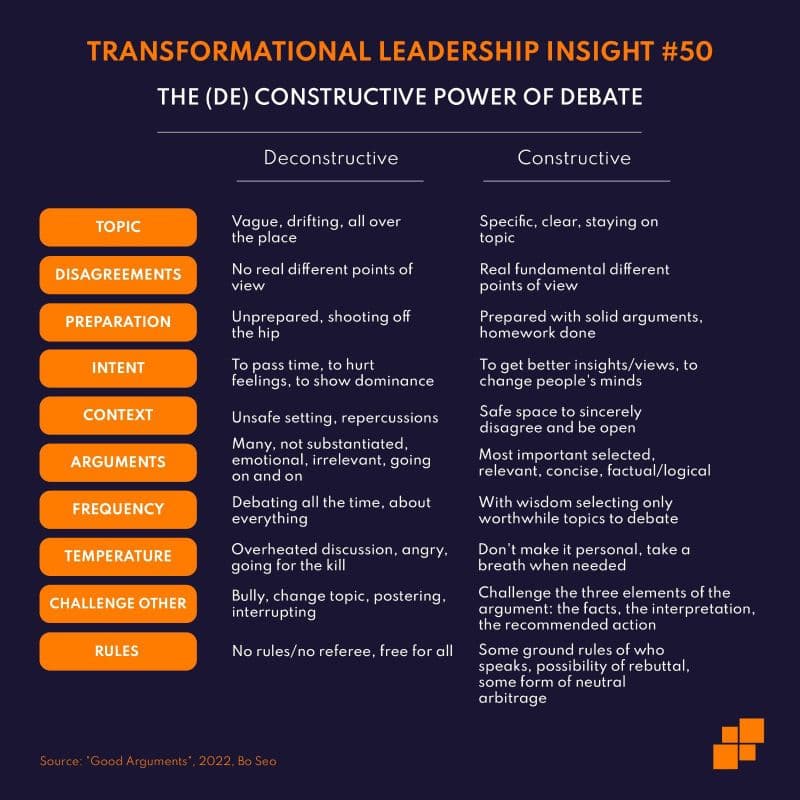
In a transformational situation challenging choices have to be made. Using debate and arguments can be a positive tool to create better insights and alignment but can also cause escalating polarisation and resentment. How to best use this tool? In this context I enjoyed reading the new book “Good Arguments” by Bo Seo, a former wold champion in debating. Some of the insights:
- People tend to debate topically and drift off topic easily and sometimes deliberately. Stay on topic and regularly ask “What are we actually debating?”.
- A good debate requires for the different sides to prepare, collect facts, gather their thoughts, etc. Just starting a debate by shooting off the hip is not constructive.
- Be clear of the intent of the debate and be aligned on it. If one sees it as a way to get better insights and the other only wants to show who is boss, it will create failure.
- The temperature of a debate can quickly overheat, as anger and competitive tendencies take over, and personal attacks come up. It’s key to keep it cool or take a break. Are you winning the argument but losing the relationship?
- Challenging the opponents argument is helpful if it’s focused on the facts, interpretation, recommended action, relevance, etc. However, bullying, changing topics, postering, or personal attacks are derailers.
- How safe is the context where the debate is happening. Is there a sense of safety to freely speak and challenge the hierarchy in the room, or fear of repercussions.
- Is the debate a free for all without rules and referees or are their some rules in terms of everybody gets time to make the argument, there is time for rebuttal, and closing. How are you using debate in your organisation? What are some best practices you use?