
18. July 2024
Quit or grit: when to persevere and when to quit
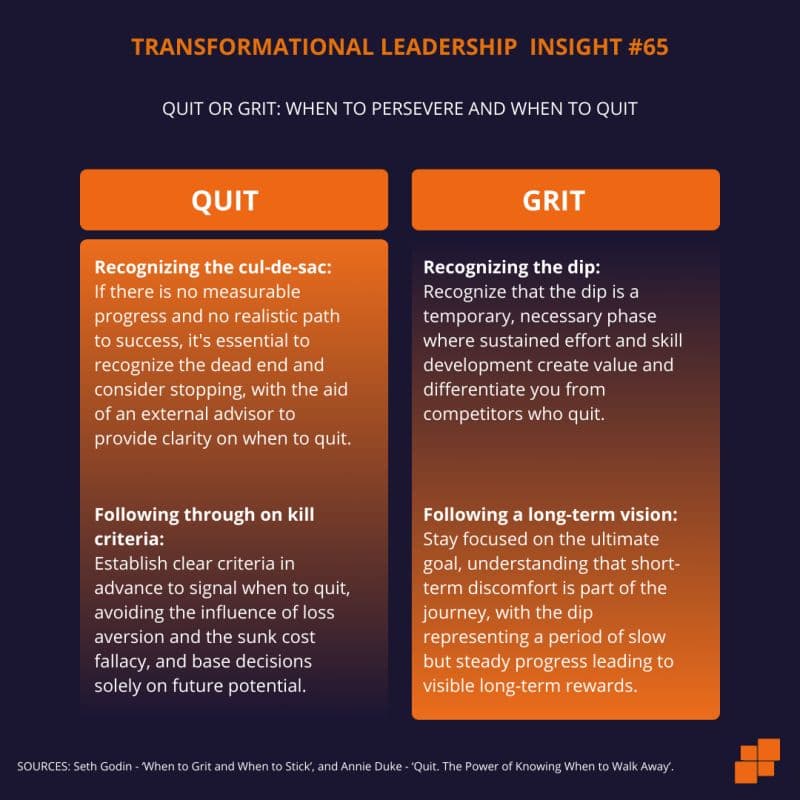
In a transformational situation, it can be a challenge to know when to perservere and when to pivot. In their books, Seth Godin ('When to Grit and When to Stick') and Annie Duke ('Quit. The Power of Knowing When to Walk Away') give some helpful insights.
- Knowing when to persevere:
- Recognizing the dip: Understand that the dip is a temporary but necessary phase. It's a period of effort that comes after the initial excitement has waned but before success is within reach. Honing skills, experience, and insights during the dip creates value and sets you apart from competitors who give up.
- Following a long-term vision: Stay focused on the ultimate goal and recognize that short-term discomfort is part of the journey. The dip represents a period of slow but steady progress leading to visible long-term rewards. For example, learning a new language often starts enthusiastically and then becomes challenging as grammar complexities increase. But as long as you can make steady progress, it's time to persevere.
- Knowing when to quit/pivot: Conversely, knowing when to quit/pivot is equally important to avoid wasting resources on unproductive endeavors. Knowing when to quit includes:
- Recognizing the cul-de-sac: A cul-de-sac is a dead end where continued investment of time, energy, or resources will not lead to success. An external perspective, or 'kill coach,' can help you see when it's time to quit.
- Setting and following through on kill criteria: Establish clear criteria in advance to signal when to quit, avoiding the influence of loss aversion and the sunk cost fallacy, and base decisions solely on future potential. Take, for example, a product that needs to gain market traction despite extensive marketing and development. If there's no indication of potential growth, it's time to quit. Quitting/pivoting is not failing. As both Godin and Duke emphasize, quitting strategically frees up time and energy to invest in ventures that have a greater chance of leading to success. By focusing on measurable progress, being honest about received signals, and setting clear criteria for quitting, we can ensure that our efforts are always directed toward the most rewarding paths. This balance between grit and strategic quitting is critical to driving sustained growth and achieving our long-term vision.