
5. December 2024
Improving quality and speed of decision-making
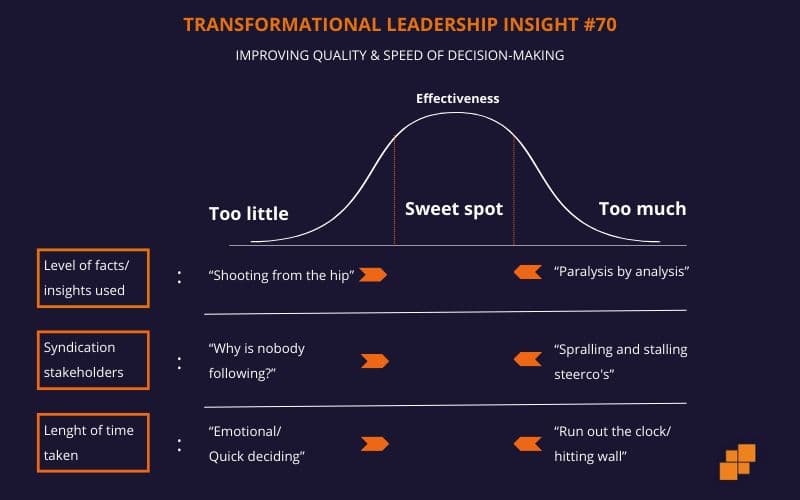
Aligning Decision Quality to Drive Business Momentum To transform an organization effectively, enhancing both the quality and speed of decision-making is essential. This not only builds momentum but also accelerates operational efficiency. Here are three key levers to recalibrate:
- Balance Facts and insights (the 70% Rule) Organizations often oscillate between two extremes: excessive analysis, leading to paralysis by overthinking, or hasty decisions based on outdated practices and opinions rather than data. Strike a balance by asking critical questions upfront and identifying the essential insights needed to achieve a 70% quality answer within a defined time and resource frame.
- Effective Syndication The syndication process can be equally challenging. On one end, involving too many stakeholders leads to protracted discussions and compromises that dilute the decision, with sprawling and stalling steercos as examples. Conversely, for example, decisions made centrally without input from implementers ignore valuable insights. Engage those with meaningful perspectives and who need to provide resources before formal meetings, and aim for constructive, prepared dialogue over lengthy debates.
- Timely Decisions Managing the timing of decisions is crucial. Many decisions are delayed until external pressures arise, resulting in missed opportunities. Kicking the can down the road or running out the clock are often misused. Aim for timely decisions, ideally when you have sufficient data (about 70%) and alignment with stakeholders, and more time comes at an opportunity loss and no new insights. Beware, on the other hand, of rushing into a decision if homework has not been done yet; there is limited opportunity loss, and new insights might be gained. By calibrating these levers, organizations can foster a culture of informed, agile decision-making that propels them forward. A helpful question to ask is, “For our top 10-20 decisions, how do we calibrate them even better on these three dimensions?” ...meer