
21. October 2026
Agreement is not alignment
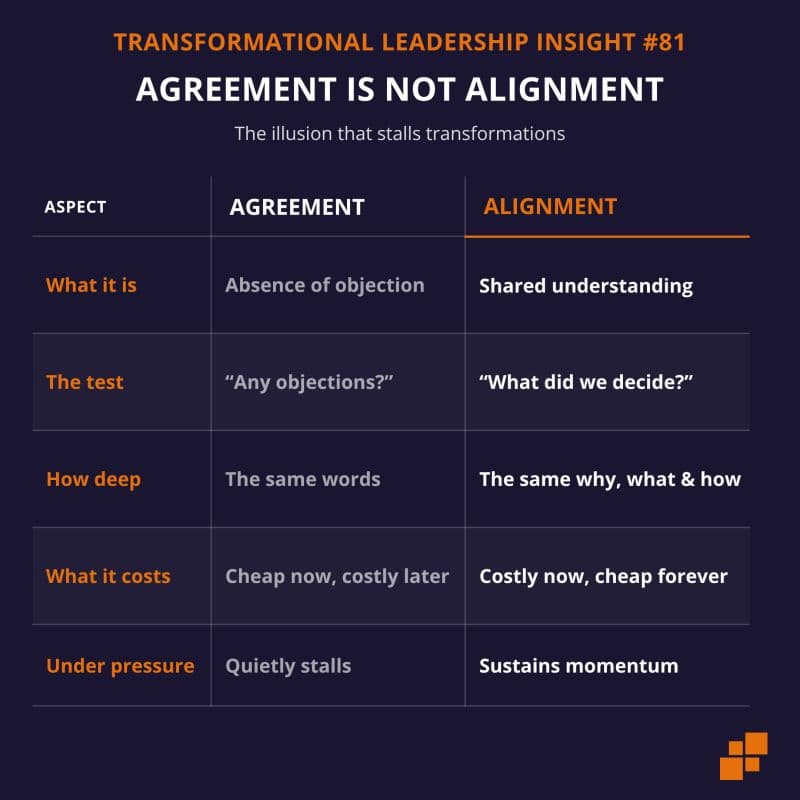
Agreement and alignment are not the same. The space between them is where well-intended change fizzles out.
Agreement is the absence of objection. It is usually checked with “Do we agree?”. When nobody pushes back, the decision is taken. That creates a false sense of alignment. In How Change Really Works (2026), Julia Dhar, Kirsty Ellmer and Philip Jameson give three causes of this false alignment.
- Executives don’t realise they disagree. The conversation stays too general. Everyone backs “margin improvement” without discovering that one of them wants to change pricing and another wants to lower costs.
- Executives pretend to agree. We overestimate how unpleasant disagreement will be, so we treat it as conflict and avoid it. There is no alignment.
- Executives know they disagree and defer. “Let’s start, we’ll resolve the details later.” Later rarely comes, and the small misalignments compound.
True alignment creates shared ownership. It comes from a proper debate on why we are changing, what we are changing, how we will do it, what each person around the table will do differently and then commit to.
A better way to check alignment is by asking everyone in the room to answer, in their own words, the why, what and how of the decision. Pauses and slightly off paraphrases make the disagreement explicit and signal that we are yet fully aligned.
Alignment takes effort up front, at the moment when superficial agreement is easy. But the investment pays off: alignment puts enduring power behind the change and protects it from fizzling out.
Which of your current change efforts has agreement, but could use more alignment?